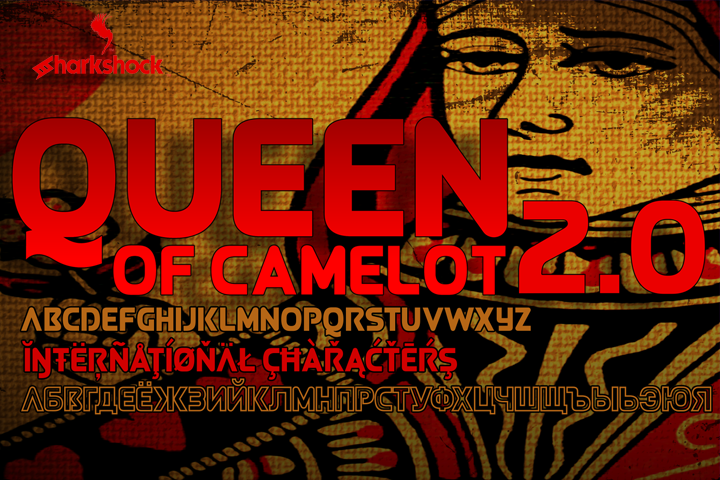
Queen of Camelot 2.0: A Fresh Take on Medieval Strategy and Storytelling
If you’ve ever wanted to rule a kingdom without leaving your couch, Queen of Camelot 2.0 might be your new favorite way to spend an evening. This updated version of the popular medieval strategy and role-playing experience brings more depth, richer visuals, and a stronger sense of community than its predecessor. Whether you’re a longtime fan of kingdom management games or someone just looking for a compelling story to unwind with, this release has something worth exploring.
Let’s get into what makes it stand out, who actually finds it useful, and how different people weave it into their everyday lives. No fluff, just practical observations.
What Queen of Camelot 2.0 Actually Offers
At its core, Queen of Camelot 2.0 is a game that combines city-building, resource management, and narrative-driven quests set in Arthurian legend. You take on the role of a ruler rebuilding and defending a kingdom after a period of turmoil. The twist? You shape not only your castle and army but also your relationships with neighboring realms, your court’s morale, and the unfolding story.
What’s new in version 2.0 is a more dynamic world. Events aren’t scripted in a linear way—they react to your choices. Trade routes shift, alliances fracture, and even your queen’s reputation influences how other characters treat you. It feels less like a scripted campaign and more like a living world where your decisions carry weight.
Real-World Scenarios Where It Shines
You might wonder: is this just another time sink, or does it serve a purpose beyond entertainment? Many users find that Queen of Camelot 2.0 fits into specific real-world moments surprisingly well.
Unwinding After a Demanding Work Day
Imagine you’ve just finished a long day of meetings and decisions. You don’t want another fire drill—you want something that lets you feel in control without adding stress. Queen of Camelot 2.0 fills that gap nicely. The early hours are about resource gathering and building up your keep. There’s a rhythm to it: you plant farms, set trading routes, and send scouts. No real-time pressure unless you choose to engage in a battle or a timed event. Many players say it helps quiet their mind because the game world is complex enough to absorb attention, but not chaotic enough to spike anxiety.
Social Connection with Friends
A lesser-known strength of Queen of Camelot 2.0 is the multiplayer alliances. Instead of competitive clashes that feel hostile, you can join cooperative leagues where members exchange goods, share knowledge, or aid in defending each other’s lands. I know a small group of friends spread across three time zones who play together one evening a week. They use voice chat to coordinate a joint attack on a bandit camp or to decide which alliance trade route to upgrade. For them, it’s less about winning and more about having a shared project. The game becomes a medium for connection, not just a solitary grind.
Strategic Thinking Practice
Some users treat Queen of Camelot 2.0 as a low-stakes training ground for decision-making. You’re constantly juggling limited resources—gold, food, lumber, loyalty, and military strength. If you invest too heavily in a standing army, your granaries might be empty when winter hits. If you focus only on diplomacy, you might be vulnerable to a surprise raid. People in logistics or project management roles often mention that the game mirrors real trade-offs they encounter at work. They run through “what if” scenarios: what happens if I delay the cathedral construction to beef up the wall? The game lets you experiment without real risk.
The Busy Parent
Parents in their thirties and forties often have fragmented free time. Queen of Camelot 2.0 is built for that. Sessions can be as short as ten minutes—set some villager tasks, queue up a building, log out. The game saves your progress constantly, and you don’t lose resources while offline. Many parents appreciate that they can pick it up during a child’s nap or while waiting for laundry, and still feel like they’ve advanced something meaningful. The narrative sections can be saved for longer sittings on the weekend.
The Creative Soul
Artists, writers, and storytellers find inspiration in the worldbuilding. The game includes a journal where your queen writes entries based on events. Some players use these generated snippets as prompts for their own creative projects. Others enjoy customizing the castle interiors and the queen’s attire as a form of digital expression. The aesthetic choices—coat of arms, throne room decorations, heraldry colors—allow for personalization that goes beyond just stat boosts. For a painter or a fiction writer, the game offers a visual and narrative sandbox to play in.
The Data Enthusiast
If you love spreadsheets and optimization, Queen of Camelot 2.0 gives you plenty of levers. Production ratios, growth curves, and diplomacy multipliers are all numeric. Some players build Excel trackers to calculate the most efficient sequence of upgrades. The game doesn’t punish this approach—it rewards thoughtful planning. It’s not the kind of game where reflexes matter; it’s about forecasting and adapting. For anyone who enjoys efficiency puzzles, this is a satisfying mental exercise.
Practical Considerations Before You Jump In
Not every game fits every person, and Queen of Camelot 2.0 has its own set of trade-offs worth knowing before you commit time.
- Platform availability: Currently available on PC and mobile (iOS and Android), but the mobile version is slightly simplified in terms of graphics and interface. Cross-save exists, but the experience is best on a larger screen if you care about visual detail.
- Learning curve: The early tutorial is decent, but after the first kingdom tier, the complexity ramps up. There are many menus—court, diplomacy, economy, army, research, events. New players sometimes feel overwhelmed. Taking it slow is fine; you don’t need to master everything in week one.
- Time commitment expectations: While you can play in short bursts, some mid-game events run over a couple of real-time days (like a feast or an alliance project). If you step away for too long, you might miss a timed opportunity. Missable events are rare but exist. The game is designed to respect busy schedules, but it’s not entirely free of FOMO triggers.
- Monetization model: Queen of Camelot 2.0 is a premium title with no ads, but it does have optional in-game purchases for cosmetic items and some convenience boosts (like faster building speed). You can finish the main storyline without spending a dime beyond the initial purchase. The challenge is balanced for free players. However, the shop can be tempting for someone who wants every outfit or wants to speed up late-game upgrades.
Strengths That Stand Out
- Narrative depth: The writing feels mature without being grimdark. Characters have motivations that aren’t always heroic. You’ll encounter moral dilemmas—like whether to shelter refugees from a plague region, knowing it risks your kingdom’s health. These choices stay with you.
- Visual overhaul: Compared to the original, the lighting, character animations, and landscape textures are noticeably richer. The game runs well on mid-range hardware, which is a relief for those who don’t own a gaming rig.
- Community moderation: The alliance system includes built-in rules for respectful communication. Toxic behavior is rare because the game’s mechanics reward cooperation over trolling. Many players mention this as a reason they stick around—it’s a pleasant island in an online world that can sometimes be exhausting.
Limitations Worth Mentioning
- Pacing dip mid-game: After you’ve stabilized your kingdom (around hour 20–30), the sense of discovery slows. You’re mostly managing complex systems rather than unlocking new surprises. Some players lose interest at this stage. Adding modded content or player-created quests isn’t supported yet, which might help repeatability.
- Limited representation: Despite the “Queen” title, the game assumes a female ruler by default, but the customization options for gender or background are narrow. Players who want to play a male monarch or a non-binary character won’t find that option baked in. It’s a small but notable gap for a game that otherwise tries to be inclusive in its storytelling themes.
- No offline progression: Although you can play without an internet connection for the campaign mode, alliance features and event updates require a connection. For commuters with spotty underground service, this is a bummer.
Who Might Want to Reconsider Before Buying
Queen of Camelot 2.0 isn’t for everyone. If you prefer fast-paced action or competitive multiplayer with ranks and leaderboards, this game will feel too deliberate. If you hate any form of resource management or waiting for timers, even with the premium pricing, the mechanics won’t charm you. Also, if you’re someone who dislikes any amount of microtransactions in a paid game, the cosmetic shop might rub you the wrong way, even though it’s entirely optional.
On the flip side, if you’ve ever enjoyed titles like King’s Bounty, the Settlers series, or story-heavy simulation games, this is likely a good fit. The balance between ruling a kingdom and living through personal narratives is rare. Queen of Camelot 2.0 leans into that gap and does it with polish.
Final Thoughts on Making It Yours
Ultimately, the best way to approach Queen of Camelot 2.0 is to treat it as a tool for a certain kind of ease. It’s a space where you can build something, make mistakes, and watch it change under your influence—without real-world consequences. For some, that’s pure escapism. For others, it’s a low-pressure sandbox to test decision-making styles. And for a lot of people in their twenties through fifties, it’s simply a beautiful game that respects their time while offering a richer story than most strategy games bother to write.
If you decide to give it a try, start with the campaign first. Let yourself be curious about the world rather than rushing to optimize everything. The kingdom won’t fall apart in the first three turns. And the stories you’ll generate—your own choices, your own timeline—will make it feel like your Camelot, not just a generic medieval map.