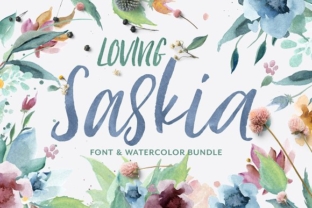
Loving Saskia: Moving Beyond the Hype to a Sustainable Creative Practice
Loving Saskia has become something of a movement for those seeking order, beauty, and intentionality in their daily lives. Whether it involves tactile journals, minimalist digital templates, or a structured creative methodology, the appeal is clear: it promises a way to bring your scattered thoughts into a cohesive, aesthetically pleasing system. Yet, simply acquiring the tools associated with Loving Saskia does not automatically deliver clarity or productivity. Many enthusiastic newcomers stumble into common traps that turn potential into frustration. This guide explores those pitfalls and offers practical, experience-based advice on how to avoid them, ensuring that your investment serves your life rather than complicating it.
The Allure of the Full Collection and the Overwhelm It Brings
One of the most frequent missteps is purchasing the entire Saskia ecosystem at once. The marketing imagery is cohesive, showing the planner, the daily journal, the card deck, and the digital dashboard arranged perfectly. It is easy to believe that owning the complete set will automatically create a bulletproof workflow. Unfortunately, this often leads to choice paralysis. When you sit down to plan your day, you are faced with a dilemma: should the morning reflection go in the journal or the dashboard? Where does that project idea live? This confusion can stall momentum entirely.
A better approach is the “anchor product” strategy. Instead of buying the suite, identify the single most pressing pain point in your current routine. If you struggle to track daily tasks, start with just the daily planner. If your ideas scatter across too many apps, begin with the digital note-taking template. Commit to using that one tool exclusively for thirty days. This allows the habit to anchor before you layer in additional components. By the time you add the next item, your workflow will dictate where it fits, rather than you trying to force your life into a pre-packaged aesthetic.
Prioritizing Aesthetic Over Actual Function
Social media feeds are full of immaculate Saskia layouts. Intricate lettering, perfect color palettes, and pristine pages without a single cross-out. While visually inspiring, these images can create a hidden pressure to treat your tools as a performance piece first and a utility second. The mistake here is letting the fear of an “ugly page” prevent you from writing freely. When a tool is too precious to use, its primary value is lost.
Own the functional mess. The philosophy behind Loving Saskia centers on intentionality, not perfection. A page filled with actionable notes, crossed-out tasks, and real, raw thoughts holds infinitely more value than a blank, beautiful one. Give yourself explicit permission to use the tool loudly. The wear and tear on the pages is evidence of a life being actively managed and lived. If you find yourself avoiding a spread because you might "ruin" it, remind yourself that utility is the highest form of respect for a well-designed tool. Consider keeping a separate “practice” spread where you allow yourself to be sloppy, just to break the perfectionist seal.
Buying for the Person You Want to Be, Not the Person You Are
Aspirational buying is a powerful force. It is easy to look at a system like Loving Saskia and see it as a shortcut to becoming a more organized, creative, or productive version of yourself. The mistake is purchasing a system designed for a highly structured daily routine when your actual life is fluid and chaotic. A freelancer might buy a rigid hourly planner, only to abandon it because their days don't fit neat blocks. A creative might buy a complex project dashboard, but find it stifles their free-form thinking.
Audit your actual workflow before you buy. Spend a week observing your current habits without judgment. Write down the specific bottlenecks. Do you lose track of deadlines? Do you struggle to capture ideas on the go? Do you need a place to dump emotional clutter? Match the product to that specific friction point, not to an idealized version of your routine. If you are a parent with an unpredictable schedule, a flexible daily log with open prompts will serve you better than a time-blocked hourly planner. The goal is to find a tool that reduces friction, not one that requires you to bend your life into an unnatural shape to use it.
Three Questions to Ask Before Any Purchase
- What specific problem am I trying to solve right now? (Not what problem I wish I had.)
- Will this tool fit the spaces where I actually work? (A large desk journal is useless if you work from a coffee shop or standing up.)
- Am I willing to spend the first week learning, not just doing? (If not, start with a simpler component.)
Skipping the Method Behind the Tools
Loving Saskia is not just a collection of products; it often comes with a specific philosophy or methodology for how to use them. A common mistake is assuming that a premium tool is inherently intuitive and requires no setup. People dive in, start writing in random places, and then wonder why the system doesn’t “work” for them. The result is frustration and the feeling that the product is overhyped.
Invest the time in the “why” before the “how.” Most premium systems have a learning curve by design. The prompts, the layout, and the indexing structures exist for a reason. Dedicate the first week of use to simply following the provided guidance. Use it exactly as intended before you customize it. Treat this period as training wheels. Once you understand the original logic, you can intelligently break the rules. A user who skips this step often creates a chaotic system that mimics the aesthetic but lacks the functional backbone, leading to abandonment within two weeks.
Misunderstanding the True Investment
There is a common debate around the cost of premium creative tools like those in the Saskia ecosystem. Some balk at the upfront price, while others buy cheap knock-offs to save money. The genuine mistake here is focusing on the sticker price rather than the long-term value and cost-per-use. A cheap notebook that falls apart, has thin paper that bleeds, and features a layout that doesn't quite work will end up in a drawer after a month. That is a waste of money, regardless of how little it cost. Conversely, a well-made tool that you use daily for a year offers tremendous value, even if the initial outlay was higher.
Calculate cost-per-use, not cost-per-item. A physical Saskia journal used every day for a year costs less than a daily latte. A digital bundle used for client work or personal projects for several years is a negligible expense per session. If the price gives you pause, consider the cheaper entry points within the ecosystem. Many brands offer a “mini” version or a starter kit. Alternatively, wait for a seasonal purchase. Buying the real thing with intention is almost always more satisfying and economical in the long run than buying a series of disappointing imitations.
Neglecting the Community and the Digital-Physical Hybrid
One of the most overlooked aspects of Loving Saskia is the community that supports it. Going it alone is a significant missed opportunity. The forums, social groups, and official tutorials are filled with troubleshooting tips, creative layouts, and practical hacks that extend the life and utility of your tools. Similarly, many users make the mistake of treating the physical and digital aspects as separate worlds. They buy the beautiful paper planner but ignore the digital companion, or they buy the digital dashboard but never pair it with a physical capture tool.
Leverage the ecosystem fully. Join the community even if you are a beginner. Seeing how others solve the “messy middle” of their workflows can inspire you to stick with your tools on hard days. Experiment with a hybrid model. Use the physical journal for deep reflection and daily capture, and use the digital dashboard for indexing, archiving, and quick reference. The true power of a well-designed system often emerges at the intersection of analog and digital, where the tactile meets the searchable.
Practical Checks Before Your Next Commitment
Before you make another purchase or feel guilty about an abandoned tool, run through this short checklist to realign your approach to Loving Saskia:
- Check your format: Are you buying physical when you live digitally, or vice versa? Be honest about your natural habits.
- Check your space: Do you have a dedicated place to use and store this tool? Out of sight often leads to out of mind.
- Check your time budget: Do you have fifteen minutes a day to dedicate to this system? If not, scale down.
- Check for a starter version: Is there a trial, a sample, or a smaller format available? Test before you invest heavily.
- Check the exit policy: Does the digital product have a backup or export function? Can you sell or pass on the physical product if it doesn't fit?
Loving Saskia is ultimately about intentionality. It is a set of tools designed to help you live and work with more clarity, beauty, and purpose. The path to loving your system is paved not with the most purchases, but with the right choices, patient habits, and a willingness to adapt the tool to the life you actually have. Start small, prioritize function, engage with the community, and let the process unfold naturally. That is where the real transformation happens.