Evaluating Cartoon US Presidents Dingbats as a Puzzle Concept
What This Puzzle Format Actually Involves
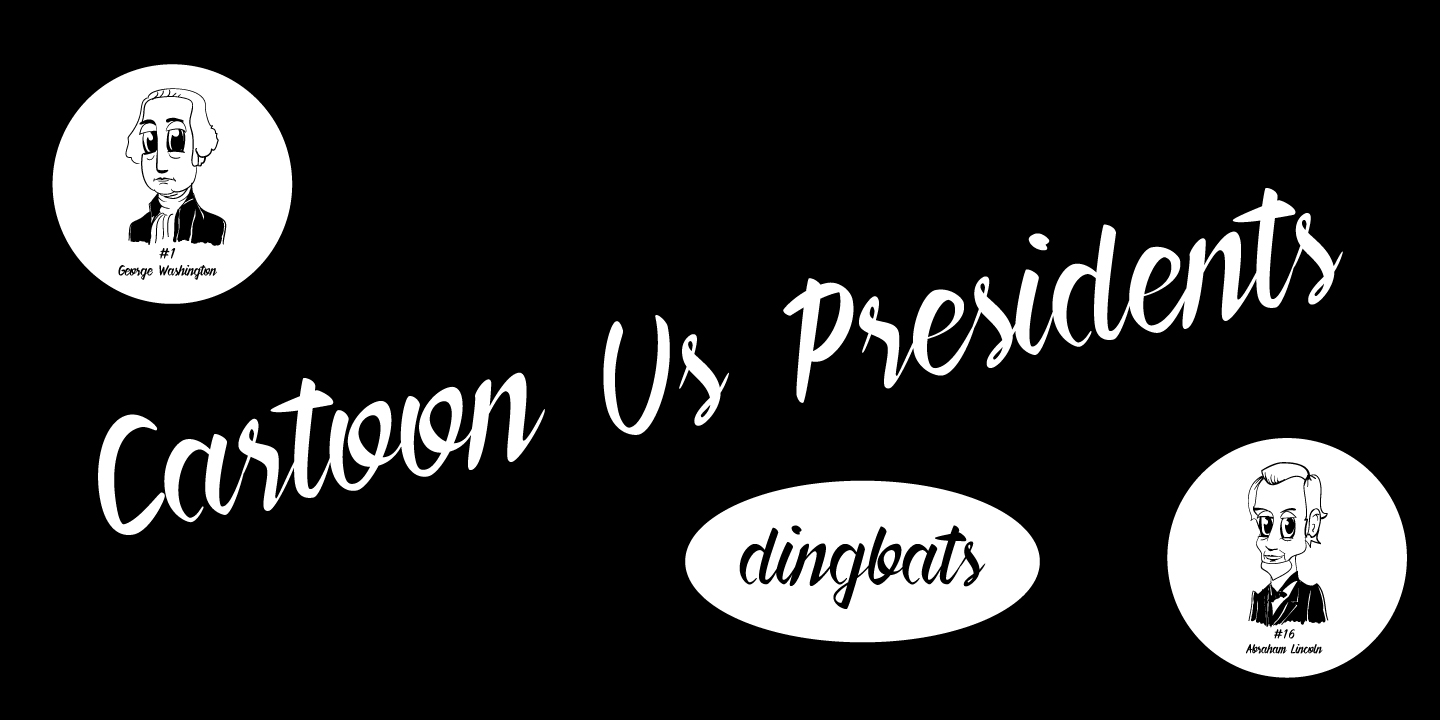
Cartoon US Presidents Dingbats refers to a specific style of visual puzzle where caricatures or simplified cartoon depictions of American presidents serve as the primary or supporting visual element in a dingbat challenge. In a traditional dingbat puzzle, players decipher a well-known word, phrase, name, or saying from an arrangement of letters, symbols, colors, and spatial cues. When cartoon renditions of US presidents are introduced into that framework, the puzzle gains an additional layer of visual recognition and historical association.
A typical example might show a small cartoon face of Abraham Lincoln positioned inside the letter O, with the letters P and T placed beside it, cluing the phrase "Honest Abe in the Oval Office" or a more compact solution such as "Lincoln in the Oval." The combination of presidential imagery with standard rebus mechanics creates a puzzle that demands both general puzzle-solving skill and a working knowledge of which president is being depicted and what they are historically known for.
These puzzles can appear in puzzle books, mobile apps, trivia games, online quiz platforms, or as standalone challenges in newsletters and social media posts. The format is not yet a mainstream category on its own, but it has found an audience among word-game enthusiasts who enjoy themed puzzle sets that layer a secondary knowledge domain—here, US presidential history—on top of standard dingbat mechanics.
Interest in Rebus and Dingbat Mechanics
People who already enjoy dingbats, rebuses, pictograms, and visual word puzzles are the most natural audience for this format. If you have spent time solving the classic dingbat puzzles found in newspapers, mobile apps like Dingbats, or the visual puzzles in trivia board games, then adding a US presidents theme introduces a fresh challenge without requiring you to learn a new gameplay mechanic. You already know how to read spatial arrangements and symbolic cues; now you also need to match a cartoon face to a specific historical figure and apply what you know about that president to narrow down possible phrases.
Interest in US Presidential History
A separate group of potential solvers are people who are curious about or already knowledgeable about American presidential history. For these individuals, the puzzle format becomes a vehicle for testing and reinforcing that knowledge in a non-trivia context. Instead of answering a multiple-choice question about which president signed the Emancipation Proclamation, you might need to recognize a cartoon Lincoln, note that he is positioned inside a large letter H, and deduce the phrase "Honest Abe in the House" or something similar. The satisfaction comes from combining two separate skill sets: puzzle logic and historical recognition.
Educators and Parents Looking for Engaging Learning Tools
Teachers and parents sometimes seek out alternative formats to engage students with historical content. A puzzle that requires students to recognize presidents by their cartoon likeness, and then use that recognition to solve a word puzzle, can feel more like a game and less like memorization. The format also encourages incidental learning: a student who solves a puzzle about a lesser-known president may become curious enough to look up additional facts about that figure. However, it is worth noting that the learning here is indirect, and the primary goal remains puzzle solving, not teaching history in a structured way.
Dual Cognitive Engagement
One of the strongest arguments in favor of Cartoon US Presidents Dingbats is that it requires two distinct types of thinking: visual pattern recognition and semantic association. Standard dingbats already exercise the brain's ability to interpret spatial and symbolic language. Adding presidential recognition means you also activate memory recall related to faces, names, and historical context. For people who value mental cross-training, this dual engagement can feel more rewarding than a single-domain puzzle.
Compact and Portable
Like most dingbat puzzles, this format does not require lengthy setup or elaborate equipment. A single puzzle can be presented in a small image or a few lines of text. This makes it suitable for quick breaks, travel, or short attention windows. You can solve one puzzle in under a minute or spend several minutes on a more cryptic arrangement. The format works equally well on paper and on a phone screen.
Thematic Cohesion
When puzzles are grouped by a single theme—in this case, US presidents—there is a natural sense of progression and narrative. A collection might move from early presidents to modern ones, or from easily recognizable figures to more obscure ones. This cohesion can make a puzzle set feel more intentional than a random assortment of unrelated dingbats. It also allows creators to calibrate difficulty, starting with George Washington and Abraham Lincoln (whom most people recognize) before moving to figures like Chester A. Arthur or James K. Polk.
Knowledge Barriers
The most obvious tradeoff is that not everyone can identify a cartoon rendering of a US president. A person who cannot distinguish Theodore Roosevelt from Woodrow Wilson in a caricature will be stuck on puzzles that depend on that recognition. This limits the audience compared to general dingbats, which rely only on common phrases and wordplay. Even if the puzzle provides visual cues such as distinctive hats, facial hair, or era-specific clothing, a solver with weak knowledge of presidential history will experience frustration rather than satisfaction.
Risk of Oversimplification or Inaccuracy
Cartoon depictions, by their nature, exaggerate certain features. A caricature of Richard Nixon might emphasize the jowls and the long nose; a caricature of John F. Kennedy might highlight the hair and the smile. While these exaggerations help recognition, they can also mislead if the solver relies on inaccurate prior mental images. Additionally, some puzzles may inadvertently include details that are historically questionable or play into stereotypes. Creators of such puzzles have a responsibility to keep depictions respectful and recognizable, which is not always easy to achieve.
Limited Sample Size and Availability
Unlike word searches, crosswords, or standard dingbats, Cartoon US Presidents Dingbats is not a widely available format. You will not find a dedicated section for it in most puzzle apps or newspapers. The puzzles tend to appear sporadically in themed collections, special editions, or user-generated content online. If you are looking for a consistent weekly source of new puzzles, you may be disappointed. This format is better approached as a novelty or occasional challenge, not as a staple puzzle type with a large back catalogue.
Potential for Repetitive Mechanics
Because the core puzzle mechanic is constrained by the subject matter, there is a risk that puzzles start to feel repetitive. Many solutions will involve placing a president's name or nickname into a common phrase: "Washington crossed the Delaware," "Jefferson wrote the Declaration," "Lincoln freed the slaves," and so on. Once you have solved a few puzzles in the set, you may begin to anticipate the patterns, reducing the cognitive challenge. This is a common issue with themed puzzle sets in general, and it is worth keeping in mind if you value variety above all else.
You Already Enjoy Both History and Word Puzzles
If you regularly read about American history and also solve crosswords, dingbats, or rebus puzzles, this format is an efficient way to combine those interests. You will likely find the recognition step straightforward, and you can focus on the wordplay aspect without struggling with identification. In this scenario, the puzzles feel like a natural extension of your existing hobbies rather than a frustrating detour.
You Are Looking for a Low-Stakes Group Activity
These puzzles work well in a small group setting where people can help each other identify a president and then collectively brainstorm the phrase. A group with mixed levels of historical knowledge can still solve puzzles because someone usually recognizes the face even if another person is better at the wordplay. This collaborative dynamic can be more enjoyable than a solo session, especially if you are hosting a themed game night or a classroom activity.
You Want a Novel Twist on a Familiar Format
If you have solved hundreds of standard dingbats and are feeling a sense of repetition, Cartoon US Presidents Dingbats can reintroduce a layer of challenge. You already understand the mechanics, but you now have to learn a new visual vocabulary of presidential caricatures. This novelty can re-engage your interest without requiring you to abandon a puzzle style you already enjoy.
You Are Unfamiliar with Most US Presidents
If you cannot reliably identify more than five or six presidents by appearance, this format will likely feel more frustrating than fun. In that case, a general dingbat puzzle app or a standard crossword puzzle would give you a better experience without the added knowledge barrier. Alternatively, you could start with a simpler puzzle format that builds presidential recognition first, such as matching games or flashcards, before attempting the combined challenge.
You Prefer Strict Educational Content
If your goal is to learn detailed historical facts about presidents in a structured way, a puzzle format is not the most efficient tool. The incidental learning that occurs during these puzzles is limited to recognition and basic associations. You will not gain insight into policy decisions, historical context, or the nuances of a presidency. For serious study, a biography, documentary, or textbook would serve you much better. The puzzle format is entertainment first, with education as a secondary byproduct.
You Are Sensitive to Political or Historical Caricature
Some people are uncomfortable with caricatures of political figures, particularly those associated with controversial legacies or recent events. A cartoon depiction might feel disrespectful or too informal for a figure you hold in high regard. If this describes your reaction, you may prefer puzzle formats that avoid political or historical themes altogether. Geography, literature, or science-based dingbats could be more suitable alternatives that still deliver the same cognitive engagement without the thematic discomfort.
Assess Your Own Knowledge Honestly
Before investing significant time or money in a collection of these puzzles, take a quick self-test. Find images of the first ten US presidents in cartoon form. If you can name at least seven of them without hesitation, you are well positioned to enjoy the format. If you struggle with four or more, consider starting with a less demanding variation of dingbats and building your presidential recognition separately.
Look for Sample Puzzles First
Because availability varies, it is wise to sample a few puzzles before committing to a purchase or subscription. Many creators offer free previews, and online puzzle communities sometimes share user-generated examples. Solving two or three samples will tell you whether the difficulty level, art style, and phrase selection match your preferences. You can then decide whether the format justifies further investment of time or money.
Consider the Context of Use
Think about where and how you plan to solve these puzzles. If you want a quick mental break during a commute, a mobile app with short puzzles is appropriate. If you are planning a themed party or classroom session, a printed collection that supports group solving may be better. The same puzzles can work in both contexts, but the packaging and platform matter for convenience. Clarifying your use case will help you identify whether the available offerings meet your needs.
Balance Novelty Against Depth
Finally, be honest about whether you want novelty or depth. If you enjoy trying many different puzzle formats and rotating through them, Cartoon US Presidents Dingbats is a fine addition to your rotation. If you prefer to go deep into a single puzzle type and master it over time, you may find that the limited content library and constrained mechanics leave you wanting more than the format can currently provide. In that case, you might be better served by a more established puzzle type with a larger corpus and a more active community.
Final Evaluation Perspective
Cartoon US Presidents Dingbats occupies a very specific niche: it is a hybrid puzzle that rewards both visual reasoning and historical recognition. For the right person, it offers a satisfying mental workout that feels distinct from either pure word puzzles or pure trivia. For someone who lacks one of those two foundation skills, it can quickly become a source of frustration. The format is best approached as a novelty or occasional treat rather than a daily staple, and it works especially well in group settings where knowledge gaps can be filled collaboratively. By assessing your own familiarity with presidential imagery and your tolerance for themed constraints, you can make a straightforward decision about whether this puzzle style aligns with your goals or whether a more general alternative would serve you better.